
 Too long, I want to choose to read it.
Let's get to know the function of window tint Window tint serves to filter or reduce the amount of sunlight entering the car. It protects against ultraviolet rays and helps lower the temperature inside the cabin to prevent it from getting too hot. The material primarily used to manufacture these films is "polyester plastic," which features a tough, thin, and smooth texture that adheres seamlessly to the glass while maintaining clear visibility.
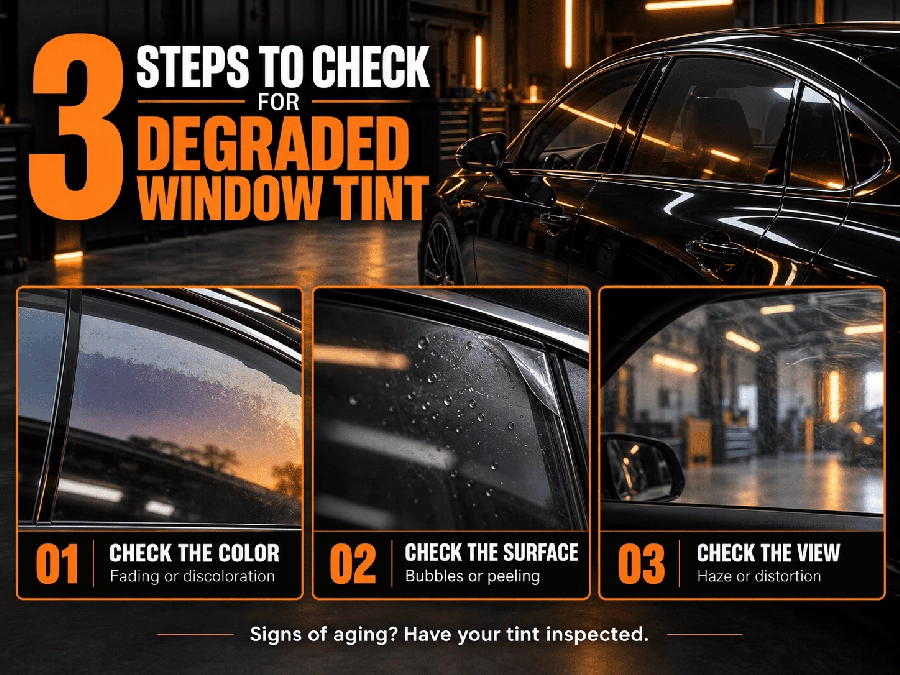
What is the lifespan of window tint? Standard window tints generally have a lifespan of 5 to 10 years, depending on the specific model or brand used. The film's condition degrades every year, so it is necessary to check its condition regularly. Here are simple ways to spot degraded window tint through the following steps:
Step 1: Check the Tint Color A degraded tint will appear lighter or faded compared to its original color. This indicates that the film's light-filtering efficiency is no longer as effective as it used to be.
Step 2: Check the Temperature If you feel that the temperature inside the passenger cabin is unusually high or hot, and the air conditioning doesn't seem to cool the car effectively, you should suspect that your current window tint may have degraded.
Step 3: Feel the Surface When you notice that your car's window tint is bubbling, wrinkled, or has spotty air bubbles, it means it is officially time for you to get a new tint installed.
When purchasing window tint, you should only choose standard, reputable brands to ensure efficiency and value for your money. Substandard window tints have a short lifespan and degrade quickly, requiring frequent replacements, which wastes your time and money unnecessarily. As the old saying goes, "Penny wise, pound foolish."