
 Too long, I want to choose to read it.
The alloy wheels we use to customize our cars today differ not only in size, design, and color but also in their manufacturing processes. Today, the Lenso team is here to clear up the mystery of why certain wheels with similar designs are priced higher than standard aftermarket wheels.
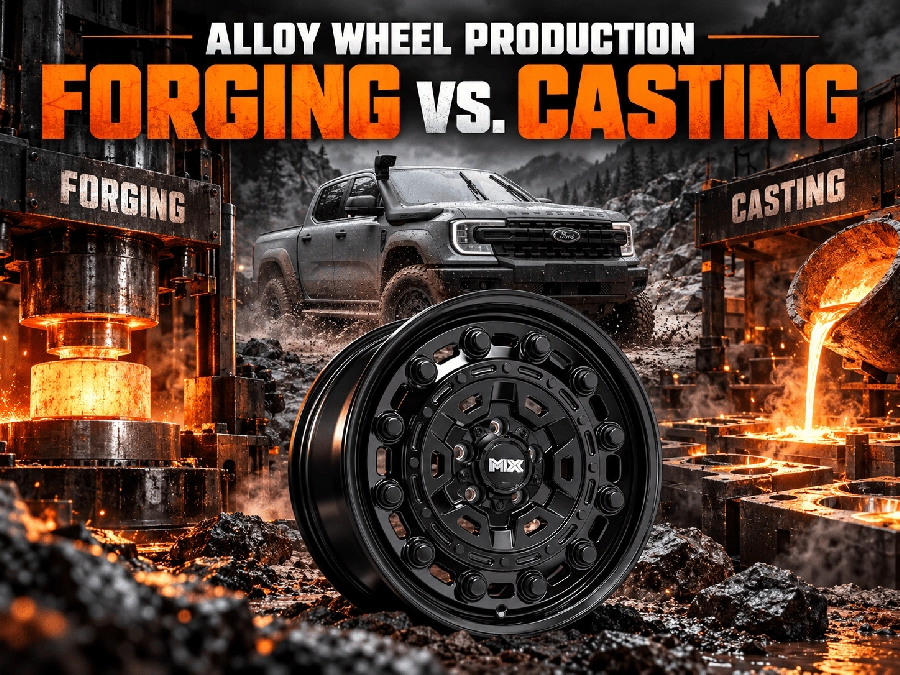
How many manufacturing processes are there? There are two main manufacturing processes for alloy wheels:
1. High-Pressure Forging The process begins by melting the aluminum alloy at an optimal temperature. The solid metal block is then forged under high pressure to compress the molecules, eliminating air bubbles and maximizing stress resistance. The final step involves precision machining and forming to achieve a beautifully finished wheel shape. Wheels produced through the forging process are incredibly strong and resilient. They are highly resistant to impacts, which can help reduce the severity of accidents. For example, in the event of a puncture, the tire won't lose all its air instantly. Furthermore, if a forged wheel fractures, it is significantly safer because it won't break at the spokes or shatter into small pieces.
2. Casting This is the fundamental method of wheel manufacturing. It starts with melting the aluminum alloy, pouring it into a mold, and refining its appearance through the furnishing process. The cast wheel then undergoes multiple testing phases, including strength tests, crack inspections, and leak tests. The process concludes with a meticulous paint job for a flawless finish. Modern casting has advanced technologically to produce wheels that are significantly stronger and more durable. The casting process can be subdivided into two additional methods:
Low Pressure Die Casting This process utilizes low pressure to inject the molten aluminum alloy into the mold from the bottom, flowing upward like a fountain. The main advantage is that pouring from the bottom minimizes air bubbles, resulting in tightly packed metal molecules. The resulting wheel features a highly dense structure and extreme durability.
Flow Forming Casting This is currently one of the most trending wheel manufacturing processes. The Flow Forming Casting technology follows an initial half-cast of the wheel barrel. The barrel is then placed on a machine that spins and applies pressure to stretch it out gradually. The rolled material achieves high density and ultimate structural strength, delivering a highly durable wheel that is perfectly compressed at the molecular level.
Lenso's Flow Forming Process Lenso Wheel has actively adopted this Flow Forming technology in the production of various models, including the Venom series, which offers a sleek, sporty style, and the ProjectD series, which looks incredibly sharp on both sedans and pickup trucks. You can view these two Lenso wheel models at